AI Agents · entry 01/08 · 3 min read
What makes an agent
An agent is a model with tools, memory, and a goal run in a loop — a mechanism that amplifies capability and error alike.
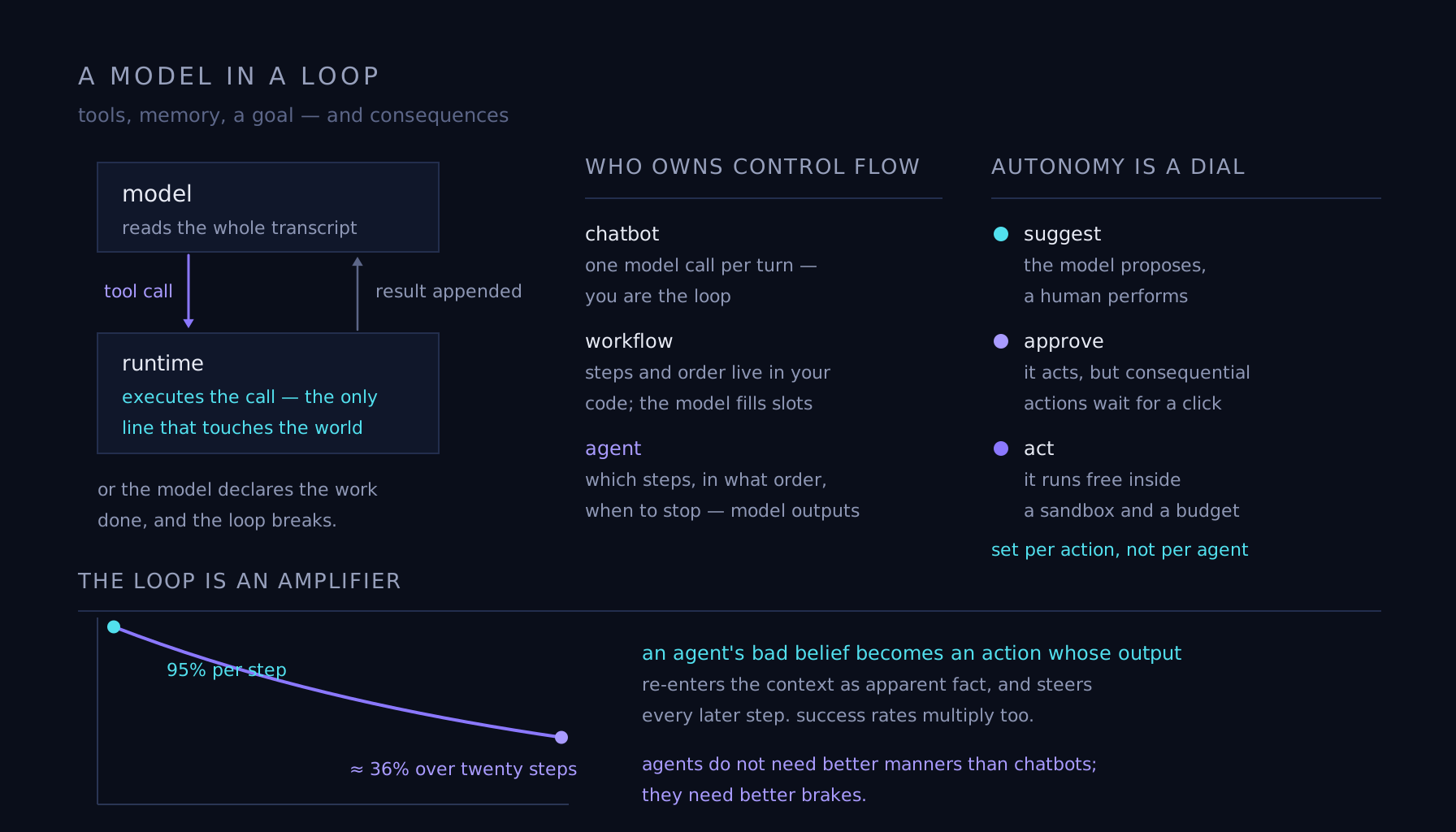
Four parts and a loop
An agent is a language model given tools, a memory, and a goal, run in a loop until the goal is met or something stops it. Each turn the model reads everything so far — instructions, conversation, earlier tool results — and decides: call a tool, or declare the work done. The runtime executes the call, appends the result, and hands the grown transcript back for another turn. That is the entire architecture. There is no separate planning module; a plan is just tokens the model emits before acting on them, and memory beyond the context window is files it writes and re-reads.
while True:
    action = model(goal, transcript)
    if action.final_answer:
        break
    transcript += execute(action)  # the only line that touches the world
Agent, chatbot, workflow
A chatbot runs one model call per turn; you are the loop, supplying judgment between every step. A workflow is a pipeline whose steps and order live in your code; the model fills in slots — summarize here, classify there — but control flow never leaves your hands. An agent inverts that: which steps, in what order, and when to stop are model outputs. The inversion is what makes agents general, and exactly what makes them hard to test — the space of paths through a loop is vastly larger than the space of single prompted responses.
Autonomy is a dial, not a switch
Between "drafts suggestions" and "acts unsupervised" sits a dial worth turning slowly. Suggest: the model proposes actions, a human performs them. Approve: the model performs them, but consequential ones wait for a click. Act: the model runs free inside a sandbox and a budget. Mature systems set the dial per action, not per agent — read anything, but approval before anything that pays, deletes, or emails a human. Where the dial sits is a decision about blast radius, and it belongs to whoever owns the consequences.
The loop is an amplifier
The same mechanism that compounds capability compounds error. A chatbot's bad answer costs one reply; an agent's bad belief becomes an action whose output re-enters the context as apparent fact and steers every later step. Success rates multiply too: 95% per step is roughly 36% over twenty steps. A hallucinated detail you would shrug off in chat becomes a deleted file three steps later. Agents do not need better manners than chatbots; they need better brakes.
Failure mode
Chatbot thinking with agent permissions. A team evals single responses, finds them excellent, wires the model to production credentials, and discovers that trajectories fail in ways replies never could — a plausible first step, an unnoticed wrong turn, twelve confident steps in the wrong direction. The unit of design, testing, and permissioning has to be the whole loop, which is why evaluating agents is its own discipline and not a bigger version of grading answers.