section 14 · status: live · 6 entries · updated 2026-08-29
Policy & Regulation
Law arrived while the field was still arguing definitions. Why AI is structurally hard to regulate, what the EU actually enacted, how the US, UK and China diverge, what compliance looks like from inside a team, what it is doing to work, and the five questions that will define the next decade's rules.
live · uses falling through a classifier into the EU AI Act's risk tiers
- The regulatory problem3 mingoverning a technology that ships faster than law can read it
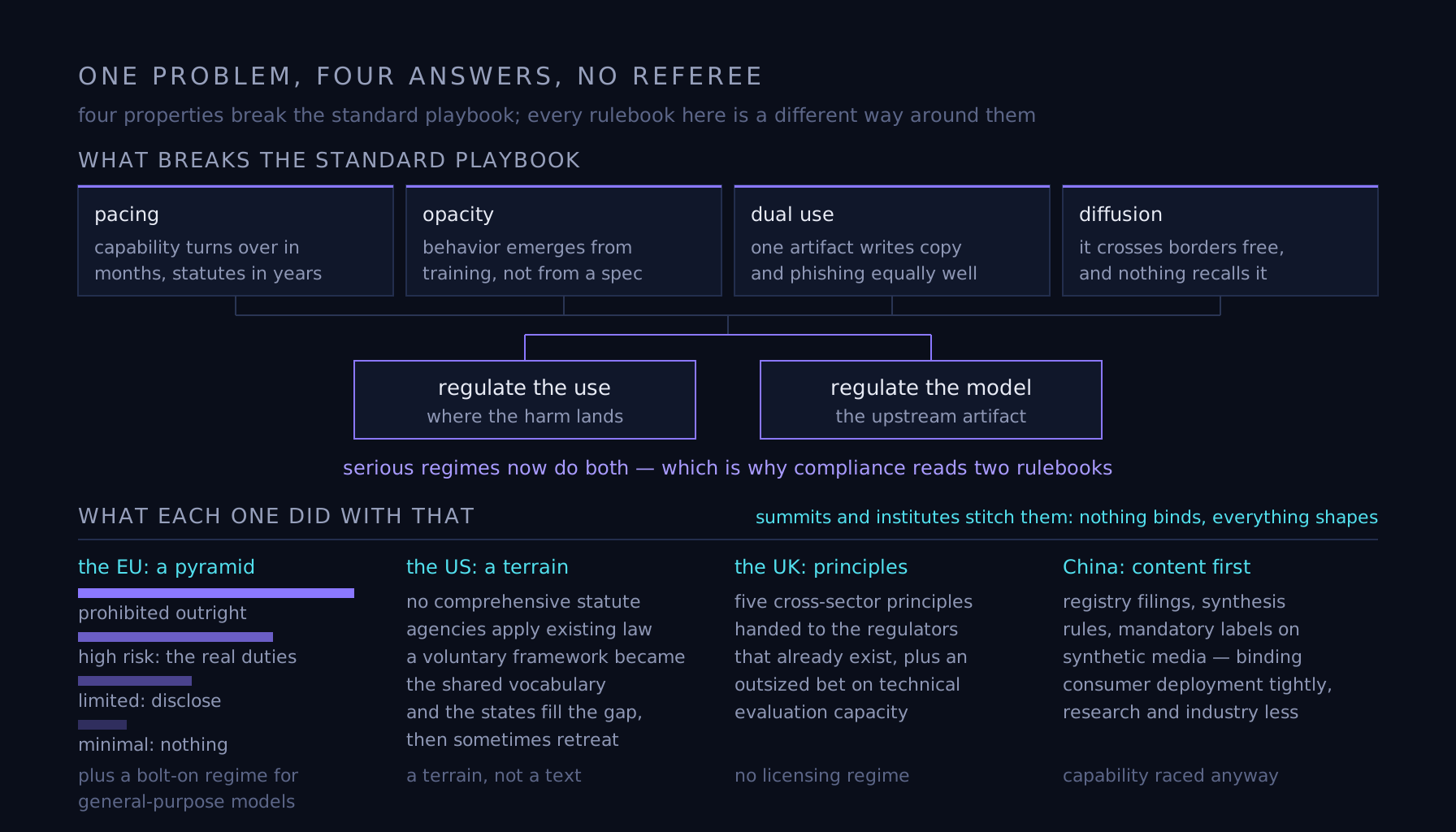
- The EU AI Act3 minthe first comprehensive rulebook, tier by tier
- The patchwork3 minfifty rulebooks, three philosophies, one internet
- Compliance in practice2 minwhat the paperwork actually looks like from inside
- AI and work3 minthe question everyone asks, answered honestly
- Open questions3 minthe debates that will define the next decade's rules
check yourselfAnswer before you open
Trying to recall something teaches it better than re-reading does. Have a go, then open the answer.
Why does 'should we regulate AI?' produce so little progress?
Because it skips every question that matters: which rule, for which risk, enforced by whom, with what evidence required before deployment. The productive arguments are boring and specific. The regulatory problem →
Under the EU AI Act, what makes a system 'high-risk'?
Its use, not its cleverness — AI inside already-regulated products, plus listed sensitive domains like hiring, credit, education and essential services. That tier carries the real obligations: risk management, documentation, human oversight, conformity assessment. The EU AI Act →
You are a US company with no EU office. Can you ignore the AI Act?
Probably not. Like GDPR it reaches anyone serving EU users, and an enterprise customer's procurement checklist reaches further still. Documentation not collected during training cannot be retrofitted at audit time. The EU AI Act →
Your company is not in the EU and has no EU customers. Why might you still be in scope of AI rules?
Because scope follows users and supply chains, not headquarters. An EU user base, an EU enterprise buyer's procurement checklist, or your component embedded in someone else's high-risk workflow can pull you in — and documentation debt compounds, since evidence not collected during development cannot be retrofitted at audit time. Compliance in practice →
Someone claims AI is or is not destroying jobs. What question settles it?
What measurement would change your mind. The honest picture is task-level rather than occupation-level, uneven across seniority, and genuinely mixed in the evidence — with the clearest signal so far at entry level in exposed roles. Anyone confident in either direction is reasoning from a story rather than a series. AI and work →