Policy & Regulation · entry 05/06 · 3 min read
AI and work
What the evidence actually shows about AI and jobs — tasks rather than occupations, the uneven distribution of gains, and why the confident forecasts in both directions are worth discounting.
Tasks, not jobs
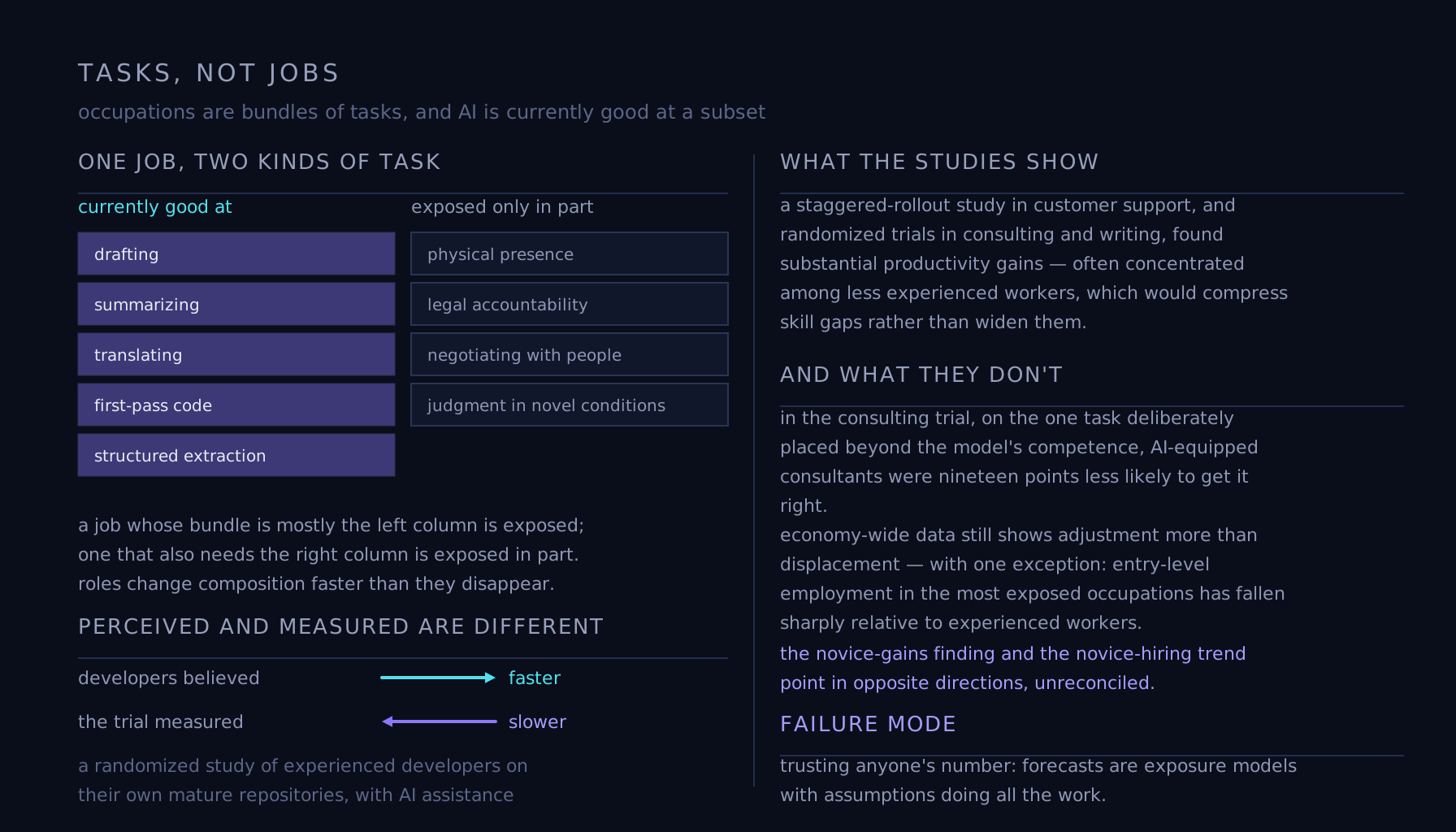
The useful unit is the task. Occupations are bundles of them, and AI is currently good at a subset: drafting, summarizing, translating, first-pass code, structured extraction, tasks with checkable answers. A job whose bundle is mostly those tasks is exposed; a job that also requires physical presence, legal accountability, negotiating with people who don't want to be negotiated with, or judgment under genuinely novel conditions is exposed in part. That framing survives contact with reality better than "which jobs go away," and it explains the observed pattern: roles change composition faster than they disappear.
What the studies show, and don't
A staggered-rollout study in customer support, and randomized trials in consulting and writing, found substantial productivity gains — often concentrated among less experienced workers, which would compress skill gaps rather than widen them. The counterweights sit inside the same literature. In the consulting trial, on the one task deliberately placed beyond the model's competence, AI-equipped consultants were nineteen points less likely to get it right. A randomized study of experienced developers on their own mature repositories found them slower with AI assistance while believing they were faster — perceived and measured speedup are different quantities, and most public confidence rests on the first. And economy-wide labor data still shows adjustment more than displacement, with one exception worth naming: entry-level employment in the most exposed occupations has fallen sharply relative to experienced workers in the same roles. The novice-gains finding and the novice-hiring trend point in opposite directions, and nobody has reconciled them yet.
Who captures the gain
Productivity gains do not distribute themselves. Whether they become shorter hours, cheaper products, higher wages or fewer roles is decided by bargaining power, market structure and policy — not by the technology, which is indifferent. This is the part of the debate that is genuinely political rather than technical, and pretending otherwise is how technologists end up surprised by the reaction to their own tools. Historically, automation has raised total output while redistributing who benefits, on timescales long enough to hurt the people caught in the transition.
Failure mode
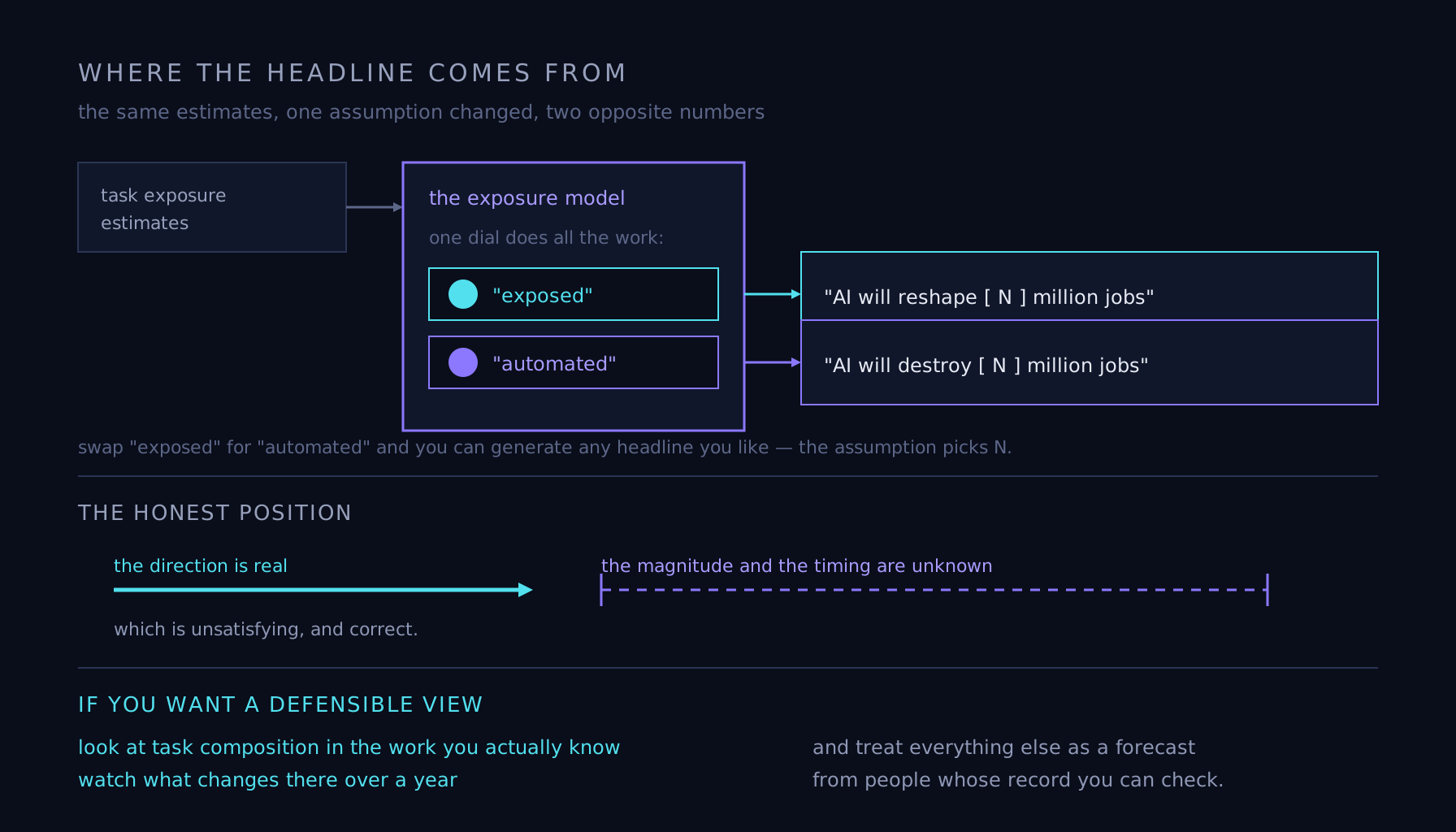
Trusting anyone's number. Forecasts of jobs lost or created are produced by exposure models with assumptions doing all the work — swap "exposed" for "automated" and you can generate any headline you like. The honest position is that the direction is real and the magnitude and timing are unknown, which is unsatisfying and correct. If you want a defensible view, look at task composition in the work you actually know, watch what changes there over a year, and treat everything else as a forecast from people whose record you can check.