Policy & Regulation · entry 06/06 · 3 min read
Open questions
Open weights, liability, training data, compute chokepoints, and frontier thresholds — five arguments still live, and how to reason about them without a crystal ball.
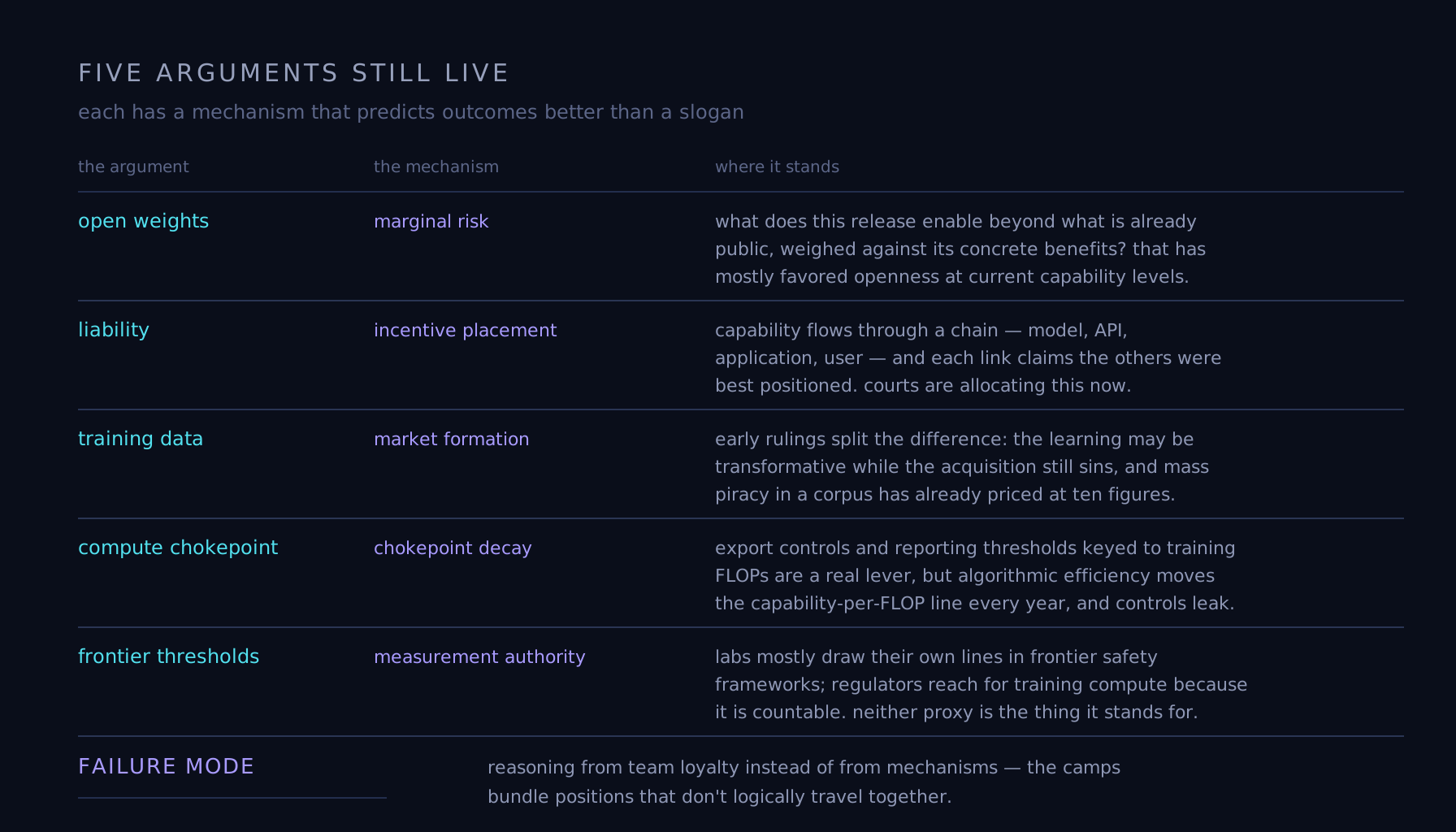
Open weights
Releasing model weights hands the world auditability, competition, research access, and independence from any vendor — and hands adversaries a copy that safety training can be fine-tuned back out of, with no revocation possible. The maturing frame asks about marginal risk: what does this release enable beyond what's already public, weighed against its concrete benefits? That analysis has mostly favored openness at current capability levels — and it re-runs at every level, which is why the argument never closes, only updates.
Liability
When an AI system causes harm, the bill needs an address: the lab that trained the model, the deployer who wired it to consequences, the user who misused it? Product-liability instincts say the party best positioned to prevent the harm — but capability flows through a chain (model → API → application → user), and each link claims the others were best positioned. Courts and legislatures are allocating this now, case by case; the practical hedge is contracts and documentation that make your link's diligence provable.
Training data and copyright
Is training on copyrighted work fair use, licensing-required, or something new? Early rulings split the difference — the learning may be transformative while the acquisition still sins, and mass piracy in a training corpus has already priced at ten figures. Licensing markets are forming (publishers cutting deals, collective arrangements sketched), and output- side questions — regurgitation, style imitation — remain wide open. The stable prediction: provenance of training data becomes an asset class, and "indistinguishable from the pile" stops being an answer anyone accepts.
Compute as chokepoint
Frontier training needs hardware that few companies make and fewer nations host, so compute became governance's favorite lever: export controls on accelerators and fab tools, reporting thresholds keyed to training FLOPs, talk of on-chip attestation. The lever is real but decaying — algorithmic efficiency moves the capability-per-FLOP line every year, controls leak, and fixed thresholds age like fixed thresholds do. Expect compute governance to persist and to be perpetually recalibrated.
Frontier thresholds
Nearly every proposal says the strictest rules apply only above some capability line — so everything depends on where the line sits, who draws it, and who checks. Today the labs mostly draw their own, in frontier safety frameworks that tie deployment steps to evaluation results, while regulators reach for training compute because it is countable and capability is not. Neither proxy is the thing it stands for, and the live question is less what number to pick than who holds measurement authority — because whoever defines the threshold defines the obligation.
Failure mode
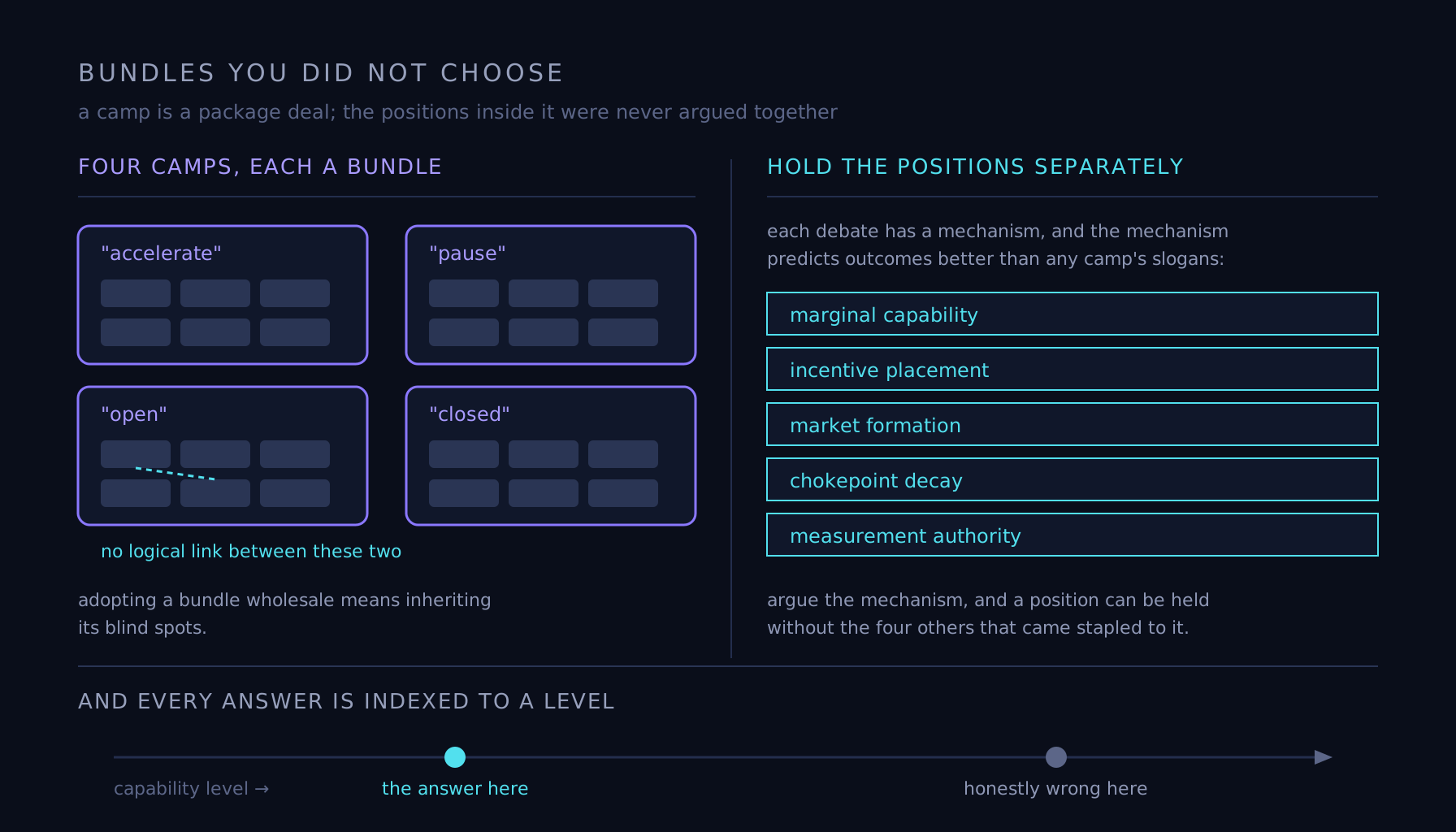
Reasoning from team loyalty instead of from mechanisms. Each debate above has a mechanism — marginal capability, incentive placement, market formation, chokepoint decay, measurement authority — that predicts outcomes better than any camp's slogans. The camps ("accelerate," "pause," "open," "closed") bundle positions that don't logically travel together, and adopting a bundle wholesale means inheriting its blind spots. Argue the mechanism, hold positions separately, and update when the capability level moves — because it will, and the right answer at one level is honestly wrong at another.