Generative Media · entry 06/06 · 3 min read
Provenance & detection
Detectors decay toward coin flips and watermarks wash out in transit, so durable trust comes from signed provenance, not forensics.
The arms race
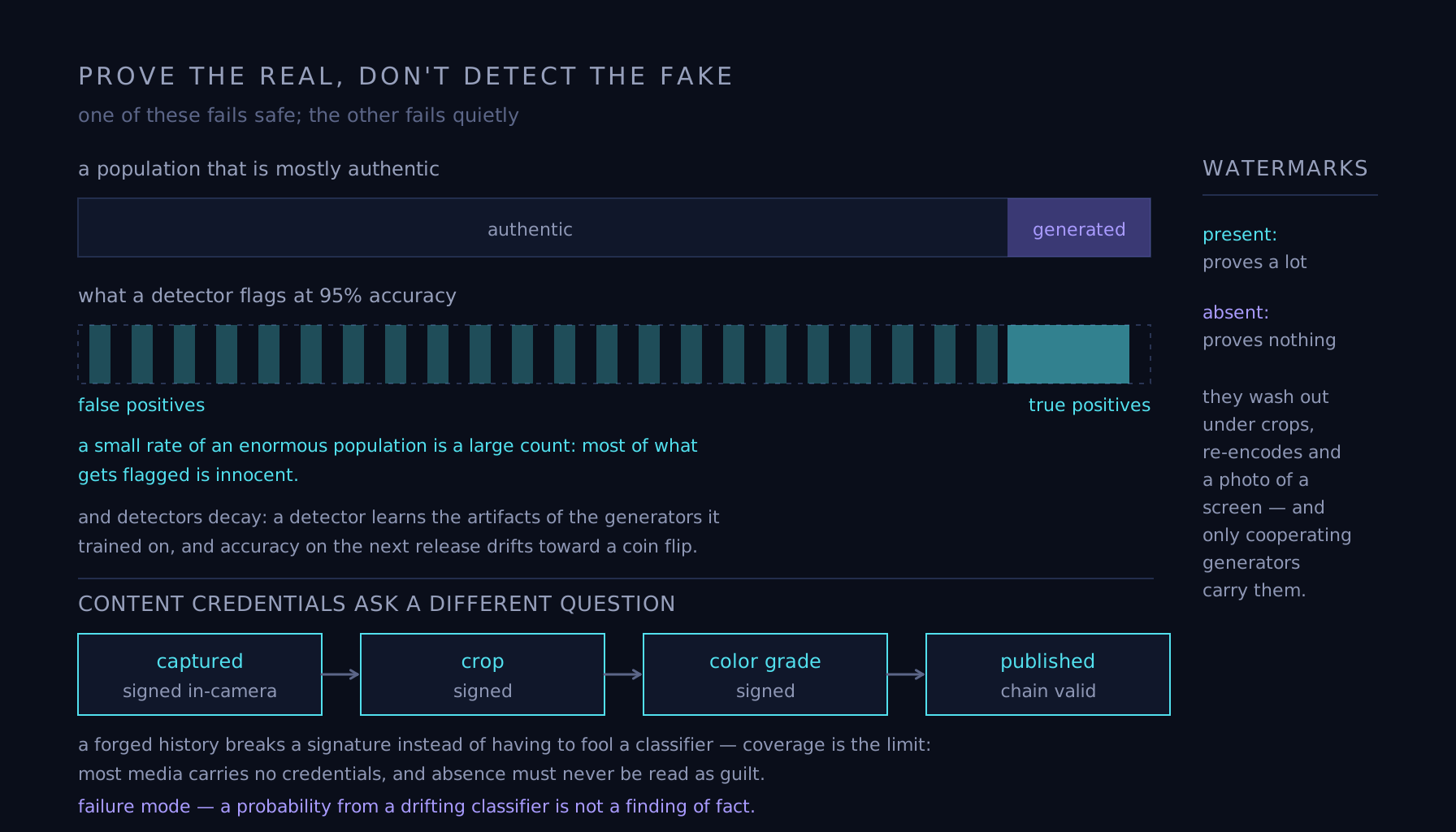
Statistical detection — a classifier scoring whether media is generated — sounds like the obvious answer and keeps failing on schedule. A detector learns the artifacts of the generators it was trained on and fails to generalize to the next release, which is exactly the one that matters; accuracy on frontier content drifts toward a coin flip. Base rates finish the argument, a standard lesson in reading evaluation numbers: at 95% accuracy over mostly-authentic traffic, most of what gets flagged is innocent.
Watermarks: real but fragile
Watermarking moves the signal into generation itself — imperceptible patterns woven into pixels or audio, biased sampling statistics in text. Applied at the model, it survives casual copying and is cheap to check. It degrades under ordinary transformation: crops, re-encodes, screenshots, paraphrase, a photo of a screen. And it only ever marks cooperating generators — an open-weight model with the watermarking step stripped, or any generator whose operator declines, produces clean output. The logic is asymmetric: a present watermark proves a lot; an absent one proves nothing.
Content credentials flip the question
C2PA-style provenance stops asking "is this fake" and answers "what is this, verifiably". Hardware signs the image at capture, each edit appends a signed record, and the file carries a checkable history from sensor to publication.
asset:    IMG_4102.jpg (sha256 9f2c...)
captured: 2026-08-14T09:31:02Z, signed in-camera
edits:    crop (signed), color grade (signed)
chain:    valid -> signer on trust list
Newsrooms, camera makers, and platforms are wiring this in because it fails safe: a forged history breaks a signature instead of having to fool a classifier. The limit is coverage — most media carries no credentials, stripping them is trivial, and absence must never be read as guilt.
The practical stance
Assume detection fails, because at the margin it does. Build provenance wherever you control capture — evidence, journalism, insurance, anything that may need to survive a dispute. And verify sources, not vibes: the operative question is no longer "does this look real", a fight human eyes have permanently lost, but "who published it, where did it appear first, who corroborates". The epistemics match model hallucination — fluency is not evidence, and photorealism is just fluency in pixels.
Failure mode
Turning a detector score into a verdict. The canonical case is the classroom: a tool reports an essay "98% AI", the student fails the course, and nobody ran the arithmetic — at any plausible false-positive rate across millions of essays, thousands of honest writers get flagged, non-native speakers most of all. The same trap generalizes to hiring, courts, and moderation queues. A probability from a drifting classifier is not a finding of fact. When a decision carries consequences, it needs provenance and process — drafts, edit history, a conversation — not a confidence score with a decimal point.