Generative Media · entry 05/06 · 3 min read
Judging generated media
Image and video models are graded by automatic metrics nobody trusts and human preference nobody can afford — how the honest version of that evaluation actually works.
The metrics and their reputation
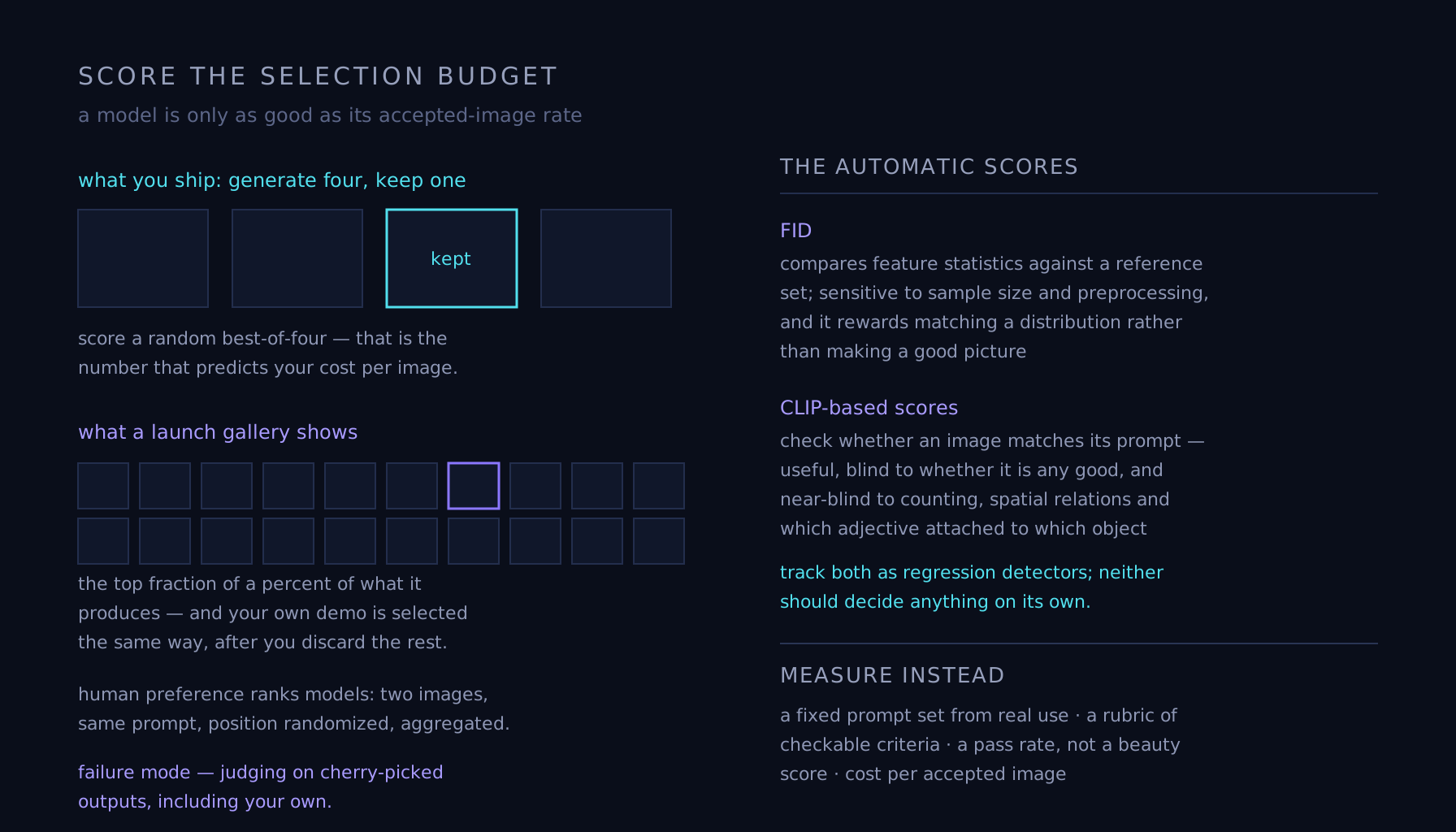
Automatic scores exist. FID compares the statistics of Inception features taken from generated images against those of a reference set, and became the field's default before accumulating a long list of objections: it is sensitive to sample size and preprocessing, it inherits whatever that feature extractor — trained for a different task entirely — happens to notice, and it rewards matching a distribution rather than making a good picture. CLIP-based scores check whether an image matches its prompt, which is genuinely useful, blind to whether the image is any good, and near-blind to counting, spatial relations, and which adjective attached to which object — which is to say the prompt failures you most want caught. Both are worth tracking as regression detectors and neither should decide anything on its own — the same posture the site takes toward benchmarks generally.
Human preference, done properly
What actually ranks models is people choosing between outputs, and the mechanics matter. Show two images for the same prompt, ask which is better, randomize position, collect many judgments, and aggregate into a rating. Public arenas do exactly this at scale and are the closest thing to a trusted leaderboard the field has — with the usual caveats: the prompt mix is theirs, not yours; raters reward eye-catching over correct; and once a leaderboard is a target, models get tuned toward its taste. That last effect has a visible signature — a house style that wins comparisons and disappoints in use.
What you should measure instead
For a product, the question is not "is this model good" but "does it do my job." That means a fixed prompt set drawn from real use, a rubric with checkable criteria — is the text legible, is the count right, is the brand color correct, are there six fingers — and a pass rate rather than a beauty score. Add the two operational numbers that decide viability: cost per accepted image, and how many generations it took to get one. A model that is second on the arena and needs half as many attempts is the better model for you.
Failure mode
Judging on cherry-picked outputs — including your own. Every model looks superb in its launch gallery, because that gallery is the top fraction of a percent of what it produces, and your own demo is selected the same way after you have quietly discarded the failures. Evaluate an unfiltered sample at the selection budget you actually ship. If the product generates four and keeps one, score a random best-of-four — never the best of twenty you kept after quietly discarding the rest. Selection is a legitimate part of the pipeline; selection you don't report is how a demo becomes a promise nobody can keep.