The Lab · instrument 16/16 · interactive
Hunt for neighbors
Click to drop a query into a little embedding space and compare brute-force retrieval with a greedy graph walk — the honest miniature of every approximate vector index.
What's real here
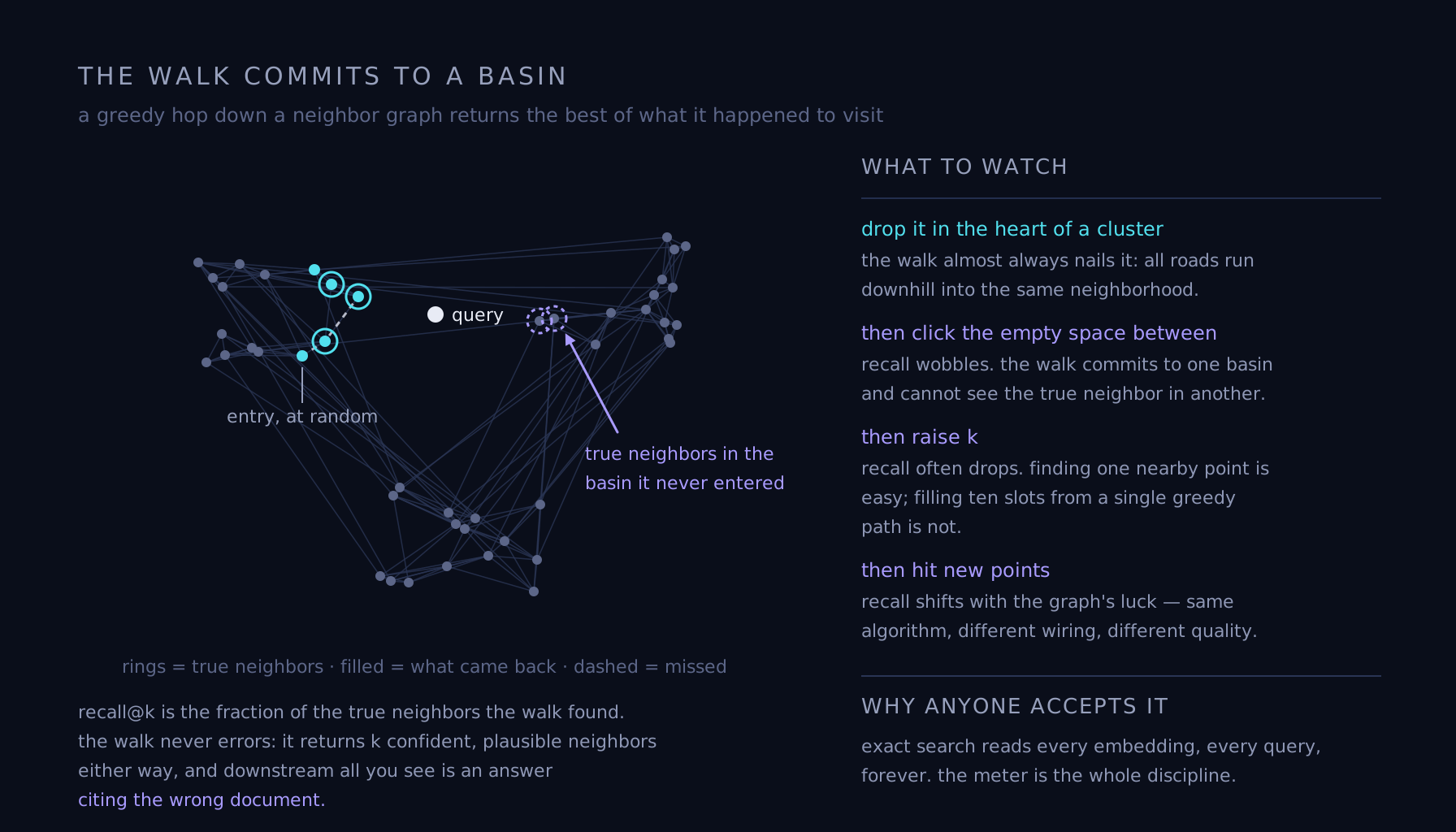
Exact mode checks your query against every point — the brute force from vector search, guaranteed right, cost growing with the collection. Approximate mode does what real indexes do: follow a precomputed neighbor graph greedily from a random entry point, always stepping toward the query, and return the best points it happened to visit. That walk is a fair miniature of HNSW's bottom layer, and the dashed trail shows you exactly the shortcut being taken.
Where to push
Drop queries in the heart of a cluster: the walk almost always nails it, because all roads lead downhill to the same neighborhood. Now click the empty region between clusters and watch recall wobble — the walk commits to one basin and can't see the true neighbor sitting in another. Raise k and recall often drops: finding one nearby point is easy; filling ten slots from a single greedy path is not. Then hit "new points" a few times and notice recall shift with the graph's luck — same algorithm, different wiring, different quality.
Why anyone accepts this
Because exact search reads every embedding, every query, forever, and at a hundred million vectors that stops being an option. The approximate index touches a few dozen points and is right most of the time — and "most of the time," measured, is a perfectly good engineering deal. The meter in the corner is the whole discipline: nobody should run approximate retrieval without a number like it.
Failure mode
Silent recall collapse, exactly as the RAG pipeline suffers it in production. The approximate walk never errors — it returns k confident, plausible neighbors whether or not the right one is among them, and downstream all you see is an answer citing the wrong document. You just watched the mechanism with your own eyes; in production the only eyes are an eval you have to build.