AI Agents · entry 06/08 · 3 min read
Multi-agent systems
Fan-out, specialist roles, and adversarial review earn their cost in specific situations; everywhere else a single capable agent wins.
When many beat one
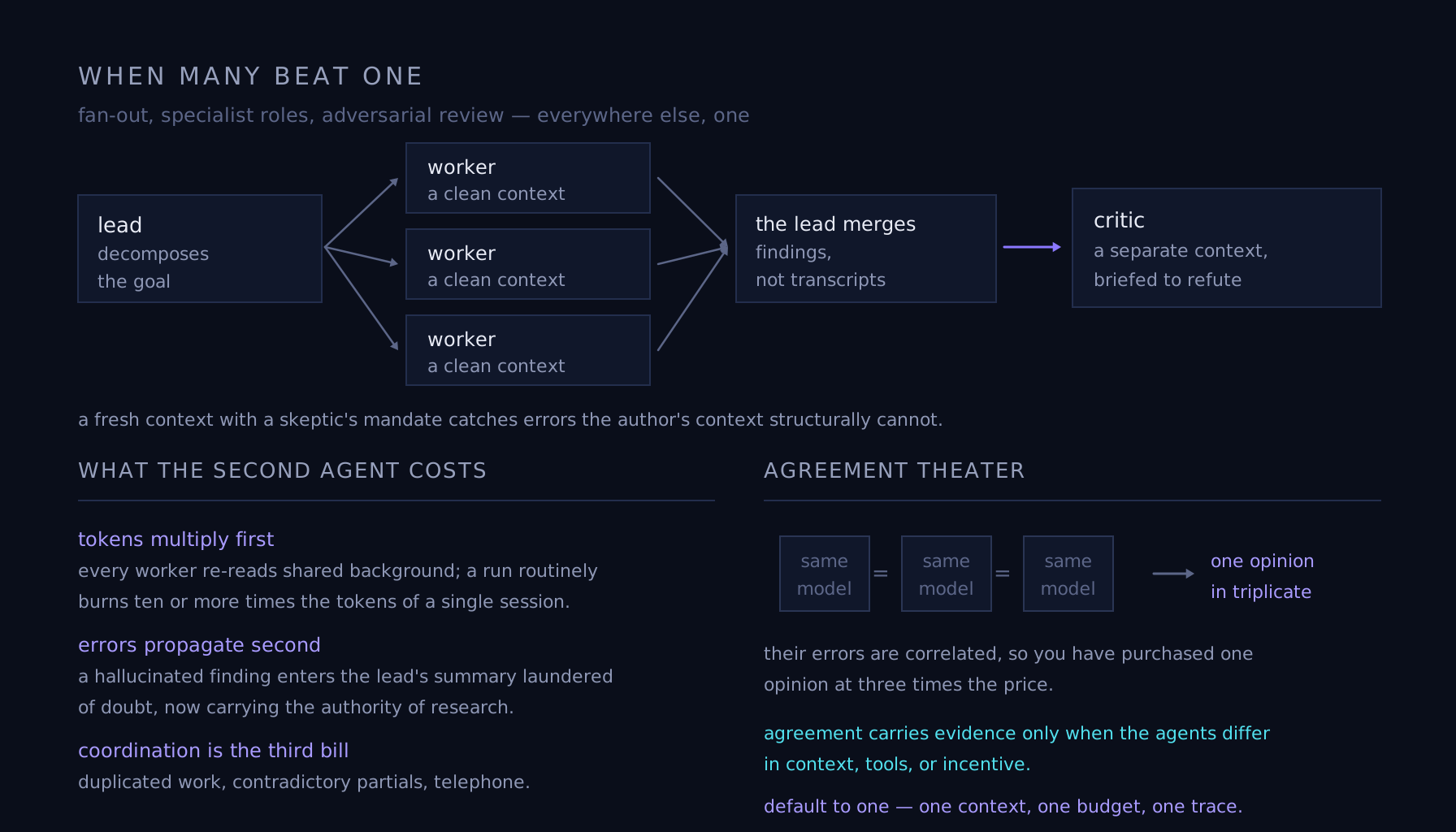
Three cases genuinely pay. Parallel fan-out: research twelve competitors, review two hundred files — independent subtasks, each worker starting with its own clean context window instead of one agent's accumulated sludge. Specialist roles: a security reviewer and a data-pipeline agent want different instructions, tools, and permissions, and separation keeps each prompt sharp. Adversarial verification: one agent is briefed to refute another's findings. A fresh context with a skeptic's mandate catches errors the author's context structurally cannot — the same reason code review works and self-review mostly does not — and the reason an agent writing code has to show you something checkable, not just a confident summary.
Orchestrator patterns
The standard shape is a lead agent that decomposes the goal, spawns workers, and merges what comes back. Two rules do most of the work. Workers return findings, not transcripts — the lead needs conclusions, not a replay of everything read. And the lead assigns crisp, non-overlapping briefs, because "look into billing" issued twice buys the same work twice.
subtasks = lead.plan(goal)
findings = parallel(worker(t) for t in subtasks)
draft    = lead.merge(findings)
verdict  = critic.review(draft)   # separate context, briefed to refute
What the second agent costs
Tokens multiply first: every worker re-reads shared background, and a multi-agent run routinely burns ten or more times the tokens of a single session. Errors propagate second: a hallucinated finding from one worker enters the lead's summary laundered of doubt, now carrying the authority of research. Coordination is the third bill — duplicated work, contradictory partial results, and handoffs that play telephone with the original goal.
Default to one
A single capable agent with good tools is the right default. It holds the whole problem in one context, costs one budget, and fails in ways one trace can explain. Reach for many only when the work is cleanly parallel, when the reading will not fit one window, or when verification demands genuine independence — and let an eval, not an architecture diagram, prove the fleet beats the soloist before it ships. Multi-agent designs drawn as org charts are usually cosplay: the boxes flatter the designer, and the tokens pay for it.
Failure mode
Agreement theater. Spawn three agents on the same model, the same data, the same framing; they concur; call it verified. Their errors are correlated, so you have purchased one opinion in triplicate at three times the price. Agreement carries evidence only when the agents differ in context, tools, or incentive — different sources, an explicit brief to refute, a second model checking the first's arithmetic. Unanimity among clones is a symptom, not a signal.