Machine Learning Foundations · entry 08/10 · 3 min read
Keeping up
How to follow AI without drowning in it: what actually changes, what only looks like it changed, and a reading discipline that survives the pace.
Most of it is noise, and that is good news
The volume is genuinely absurd — hundreds of papers a day, a launch every week, a consensus every month. But the structure underneath moves slowly. The transformer is from 2017. Gradient descent is older than most of the people arguing about it. Almost everything that arrives is a new arrangement of ideas this site already covers, which is why understanding the mechanisms is a better investment than tracking the announcements: mechanisms let you file the news instead of memorizing it.
Three questions that triage anything
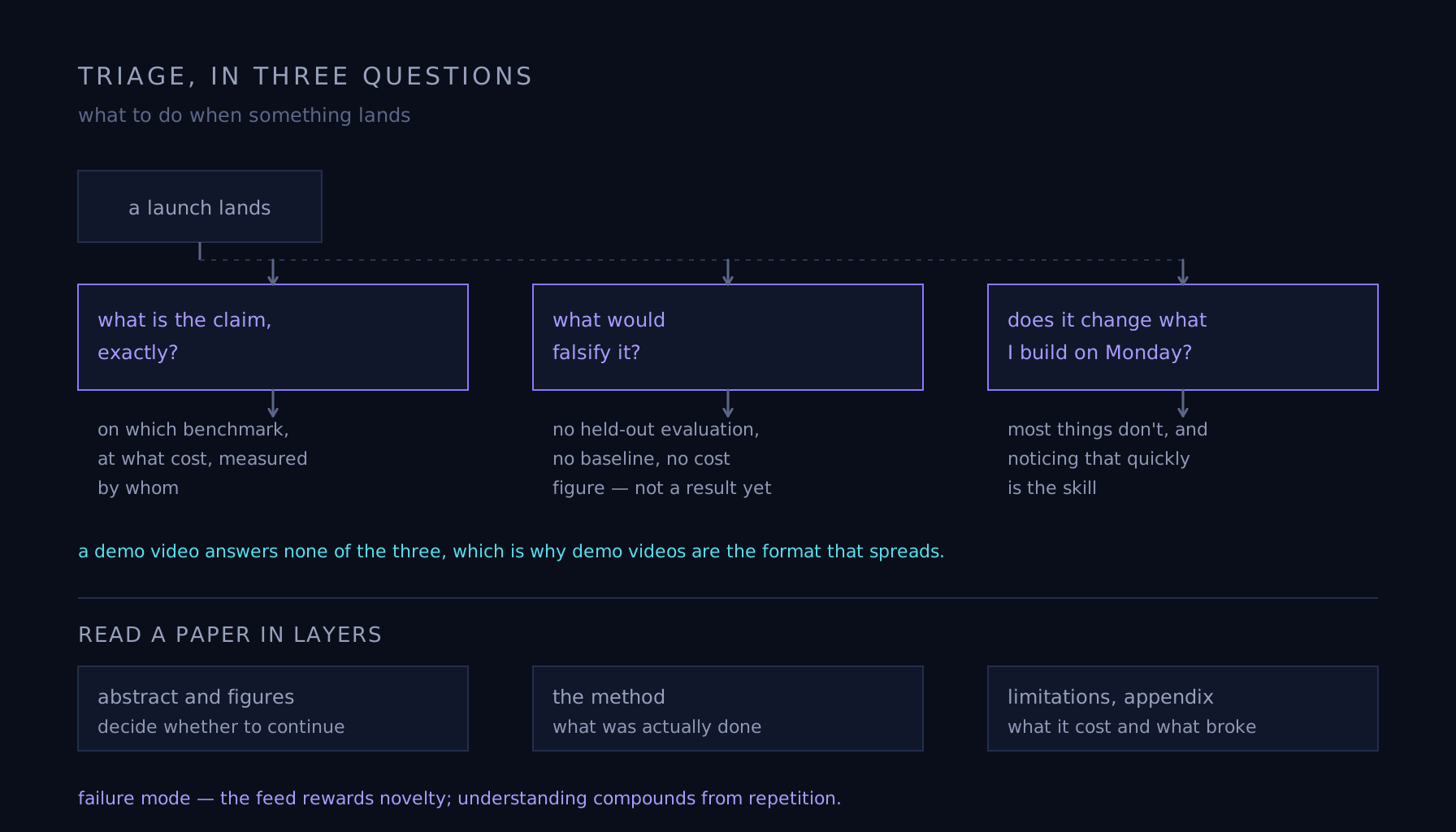
When something lands, ask: What is the claim, exactly? "Beats GPT-whatever" on which benchmark, at what cost, measured by whom — a capability claim and a marketing claim are different animals. What would falsify it? Numbers with no held-out evaluation, no baseline and no cost figure aren't results yet. Does it change what I would build on Monday? Most things don't, and noticing that quickly is the skill. A demo video answers none of the three, which is why demo videos are the format that spreads.
A reading diet that scales
Read primary sources when the topic matters to you — papers, model cards, system cards — and skip the intermediaries who read them for you. Read a paper in layers: the abstract and figures to decide whether to continue, the method to see what was actually done, the limitations and appendix to find what it cost and what broke. Follow the people who publish their failures, not just their launches. And keep a private eval: your own tasks, your own grading, run against each new model. It answers the only question that concerns you — whether this changes anything for your work — in an afternoon, and it is far harder to game than a public leaderboard, provided you don't start optimizing against it yourself and you remember that anything sent through a vendor's API has left your building.
Failure mode
Confusing keeping up with staying informed. It is possible to read about AI for two hours a day and understand it less each month, because the feed rewards novelty and understanding compounds from repetition. The people who track this field best mostly read fewer things more carefully, build something small with each new capability, and let the rest wash past — the discipline is not consuming more, it is having a mechanism to hang each new thing on. If a headline doesn't attach to something you already understand, that is a signal to go back to the mechanism, not to read another headline.