History of AI · entry 02/06 · 2 min read
Winters & thaws
AI has died twice by its own hand — the pattern of boom, overpromise, audit, and collapse is the field's most instructive dataset, and its mechanics are worth learning precisely.
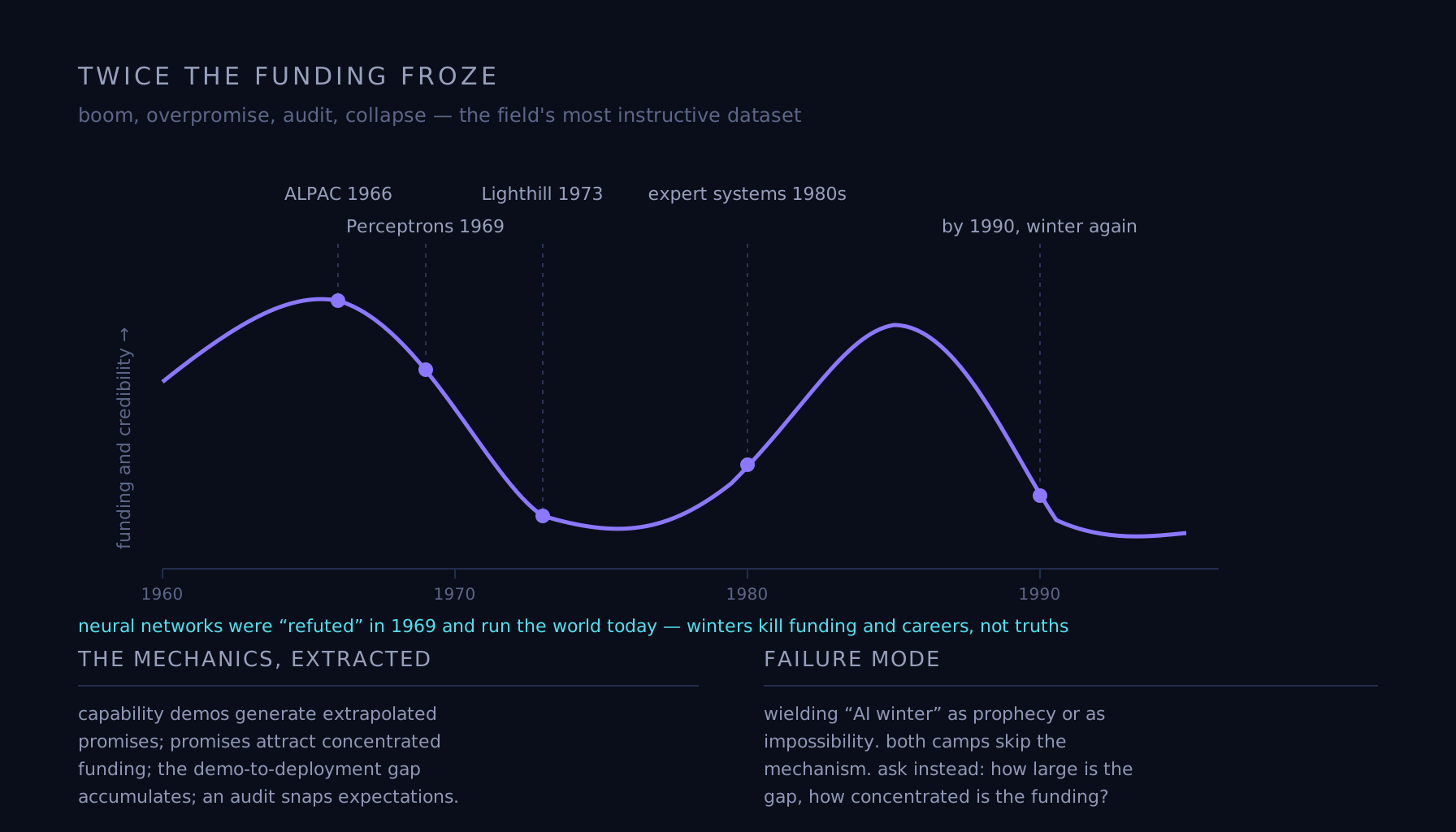
Winter one: the audits arrive
The 1960s ran on machine translation contracts and perceptron headlines. Then the reports came due. ALPAC (1966) found machine translation slower and costlier than humans; funding vanished overnight. Minsky and Papert's Perceptrons (1969) proved single-layer networks couldn't represent even XOR — a true theorem about a limited architecture, read culturally as "neural nets are a dead end," which froze connectionism for a decade. The Lighthill Report (1973) told the British government AI had failed its own goals; DARPA drew similar conclusions. By the mid-70s, "artificial intelligence" was a phrase grant writers avoided.
Thaw and second winter: the business cycle version
The 1980s boom was commercial: expert systems — thousands of hand-written if-then rules encoding a specialist's judgment — delivered real value (DEC's XCON configured computers and saved millions), and an industry of LISP machines and consultancies grew around them. The collapse was equally commercial: rule bases proved brittle (no rule, no answer), maintenance costs compounded as rules interacted, general-purpose workstations undercut the specialized hardware, and Japan's Fifth Generation project — the era's moonshot — wound down without its promised revolution. By 1990 the winter was back, colder for having burned investors as well as agencies.
The mechanics, extracted
Both winters share a machine. Capability demos generate extrapolated promises; promises attract concentrated funding from a few large sponsors; the gap between demo conditions and deployment conditions — the eternal gap — accumulates quietly; an audit or a market event snaps expectations to evidence; funding, being concentrated, exits in unison. Note what the mechanism is not: proof the underlying ideas were wrong. Neural networks were "refuted" in 1969 and run the world today. Winters kill funding and careers, not truths.
What survived the cold
Each winter's wreckage seeded the next spring. Search and planning matured into operations research and robotics. Expert systems' knowledge-engineering pain motivated learning from data instead of writing rules. And a small group kept the multi-layer flame lit through the unfunded years — patience that eventually compounded into everything current.
Failure mode
Wielding "AI winter" as either prophecy or impossibility. One camp cites the pattern to predict every boom must end identically; the other insists this time is definitionally different. Both skip the mechanism. The honest checklist: how large is today's demo-to- deployment gap, how concentrated is the funding, how much revenue is evidence versus expectation? Run the checklist and reasonable people can disagree on the temperature — but they'll be disagreeing about measurements, which is progress.