AI Infrastructure & MLOps · entry 02/09 · 2 min read
Training at scale
A frontier training run splits one network across thousands of accelerators three different ways at once — and succeeds or fails on checkpointing discipline and failure math.
Three ways to split the work
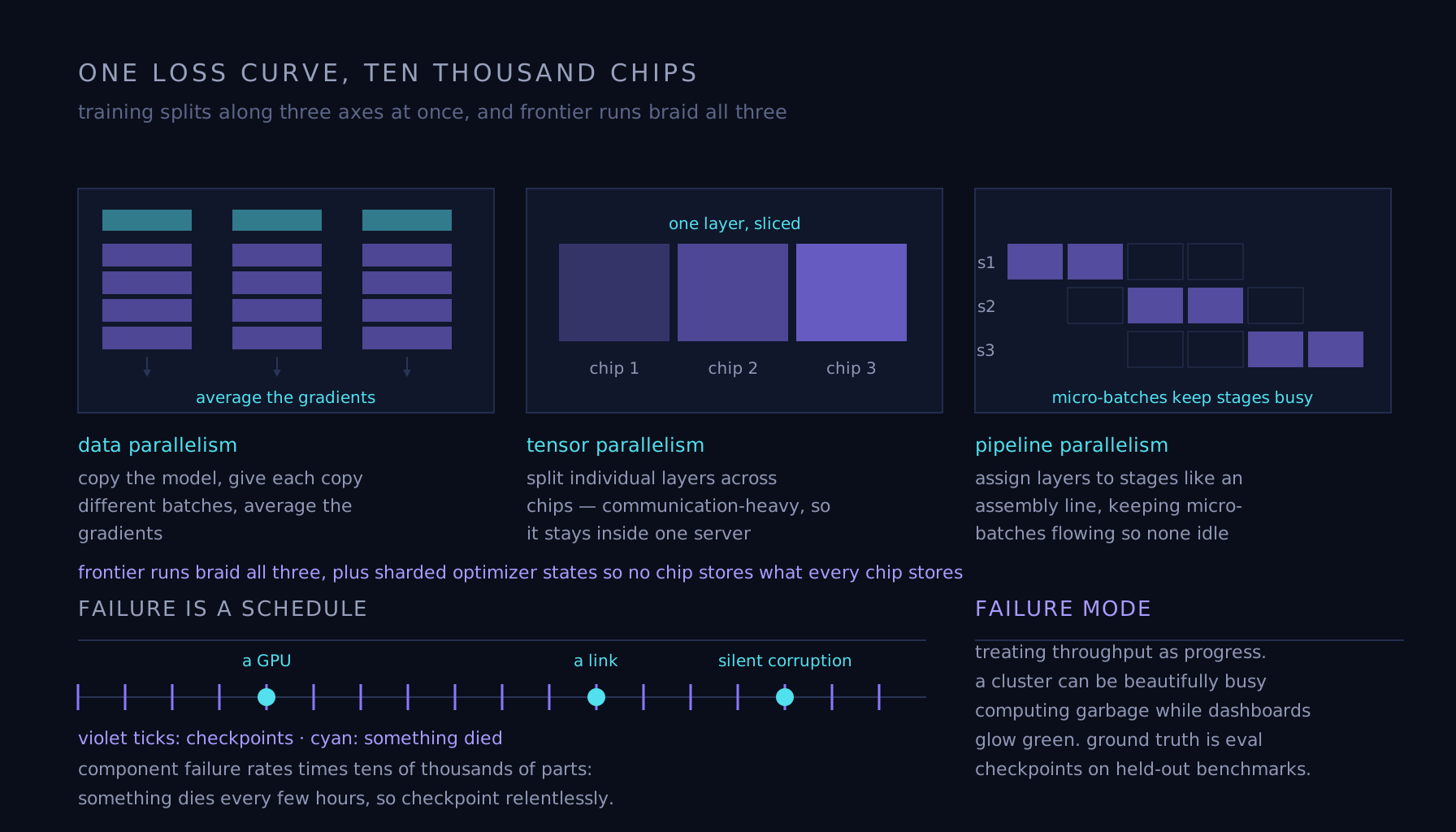
One chip can't hold the model or the workload, so training splits along three axes. Data parallelism: copy the model, give each copy different batches, average the gradients — simple, until the model no longer fits on one device. Tensor parallelism: split individual layers across chips, each holding a slice of every matrix — communication-heavy, so it stays within a tightly linked server. Pipeline parallelism: assign layers to stages like an assembly line, keeping micro-batches flowing so stages don't idle. Frontier runs braid all three, plus sharded optimizer states (the ZeRO family) so no chip stores what every chip stores. The configuration — which axis gets how many chips, given the topology — is a specialist discipline with its own job title.
Failure is a schedule, not a surprise
Multiply component failure rates by tens of thousands of parts and months of runtime: something dies every few hours — a GPU, a link, a power supply, or the subtler nightmare, silent data corruption from a marginal chip quietly poisoning gradients. Big runs therefore checkpoint relentlessly (with the engineering to make snapshots of terabytes of optimizer state fast enough to afford), monitor for stragglers and numerical anomalies, and staff an on-call rotation babysitting the loss curve like a patient in intensive care. A frontier run is less an experiment than a campaign: flight plan, telemetry, and contingency procedures for the 3 a.m. loss spike.
The stability art
At scale, training's numerical temperament sharpens. Low-precision arithmetic saves memory and bandwidth but narrows the safe range — loss scaling, careful normalization placement, and warmup schedules exist to keep gradients from exploding or vanishing into rounding. Occasional loss spikes get triaged like incidents: skip the batch, rewind to a checkpoint, sometimes quarantine suspect data. The recipe book (learning-rate schedules, initialization, batch-size ramps) is partly science and partly scar tissue — which is why scaling-law pilot runs de-risk the big one before nine figures commit.
Failure mode
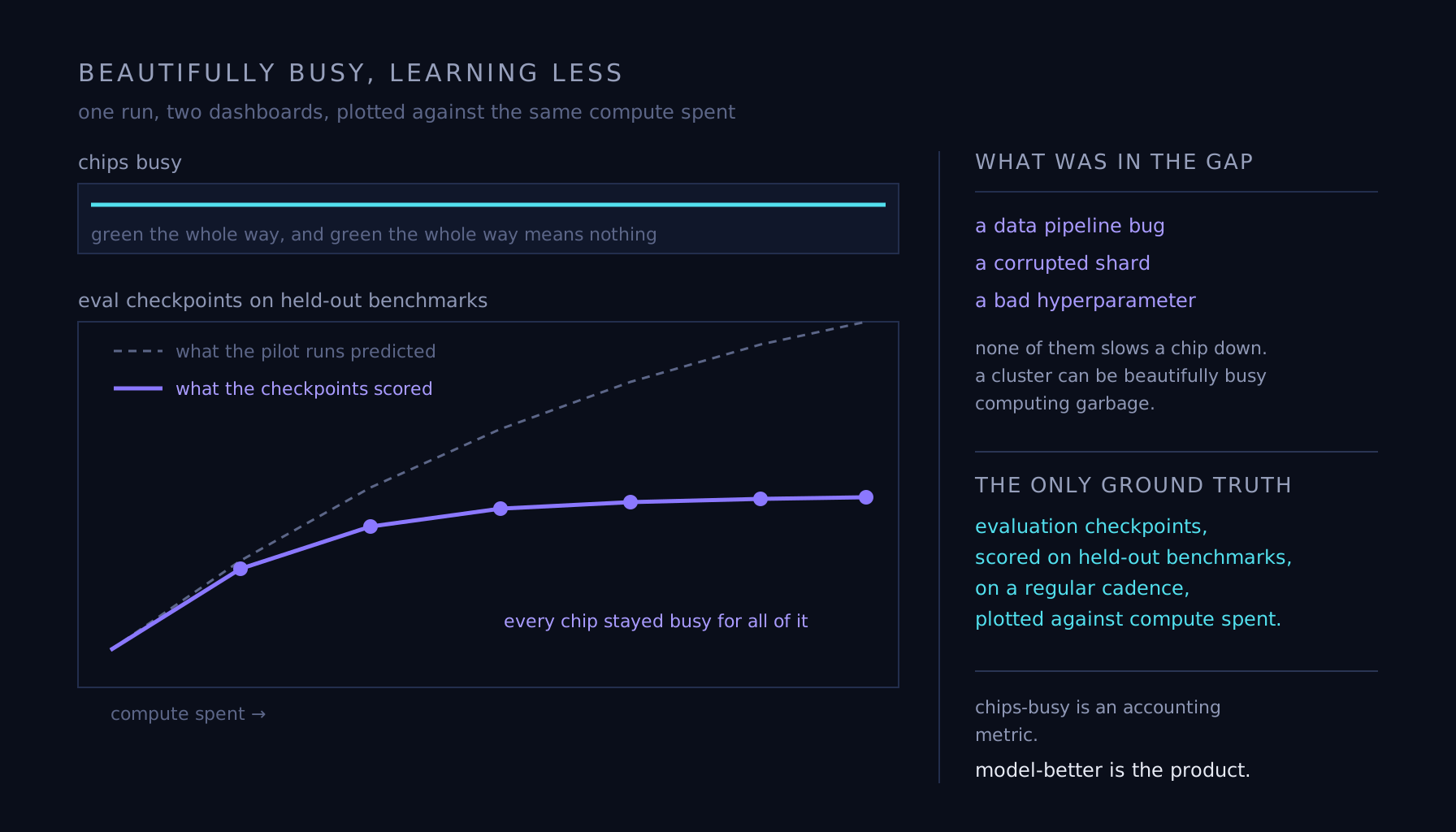
Treating throughput as progress. A cluster can be beautifully busy computing garbage — a data pipeline bug, a corrupted shard, a bad hyperparameter — and the dashboards will glow green while the model quietly learns less than it should. The only ground truth is evaluation checkpoints scored against held-out benchmarks on a regular cadence, plotted against the compute spent. Chips-busy is an accounting metric; model-better is the product.