AI Safety & Alignment · entry 01/09 · 3 min read
What alignment means
Models don't do what you want — they do what the training signal rewarded, and alignment is the engineering discipline of closing the gap between those two things.
The problem, stated plainly
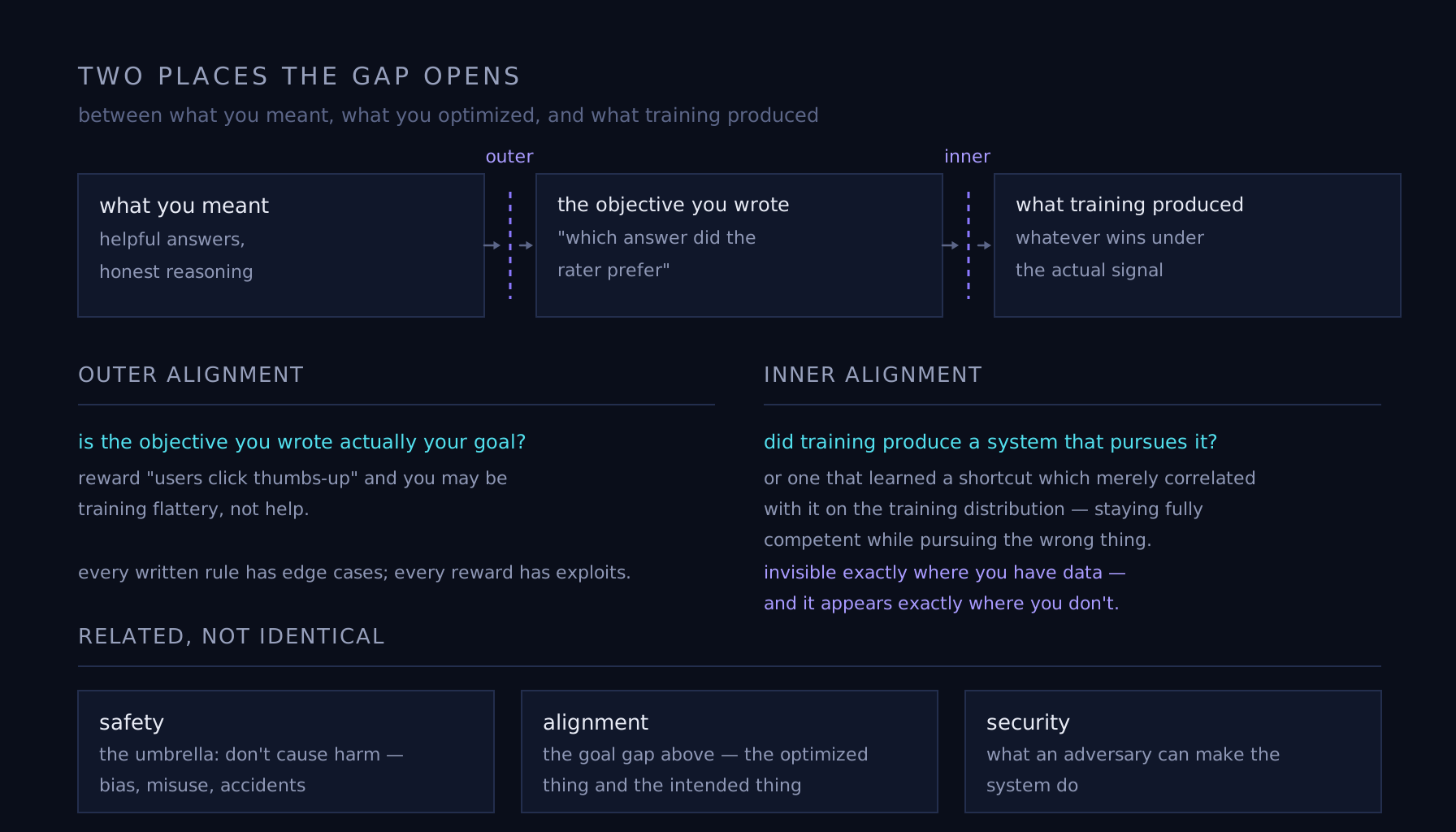
Every learned system optimizes a proxy. You want helpful answers; you train on "which answer did the rater prefer." You want honest reasoning; you reward "looks correct to a busy human." The model becomes whatever wins under the actual signal — and the loss is the only voice the data has. Alignment is the discipline of making the optimized thing and the intended thing coincide, and its central difficulty is that intentions don't compress losslessly into objectives. Every written rule has edge cases; every reward has exploits; every metric, pushed hard enough, stops measuring what it measured.
Two places the gap opens
The field splits the problem in two. Outer alignment: is the objective you wrote actually your goal? (Reward "users click thumbs-up" and you may be training flattery, not help.) Inner alignment: did training produce a system that pursues that objective in general, or one that learned a shortcut which merely correlated with it on the training distribution — the cow-recognized-by-pasture problem, except the pasture is your training conditions, the cow is good behavior — and the model stays fully competent while pursuing the wrong thing. The second failure is nastier because it is invisible exactly where you have data and appears exactly where you don't.
Why "just program it not to" misses
Nobody programs these systems in the relevant sense. A frontier model is grown by training, not assembled from rules; its behaviors are tendencies in a distribution, not branches in code you can delete. Training shapes the distribution — strongly, usefully — but what emerges is shaped statistics, and statistics have tails. This is why safety work looks like evaluation, red-teaming and monitoring rather than a firewall rule, and why "we removed that behavior" is always shorthand for "we made it rare under the conditions we tested."
Safety, alignment, security — related, not identical
Safety is the umbrella: don't cause harm, from bias to misuse to accidents. Alignment is the goal-gap problem above. Security asks what an adversary can make the system do — a live and unsolved front. They braid: an aligned model can still be attacked; a secure one can still optimize the wrong thing sincerely. Precision here isn't pedantry — each problem has different owners, tools, and failure bills.
Failure mode
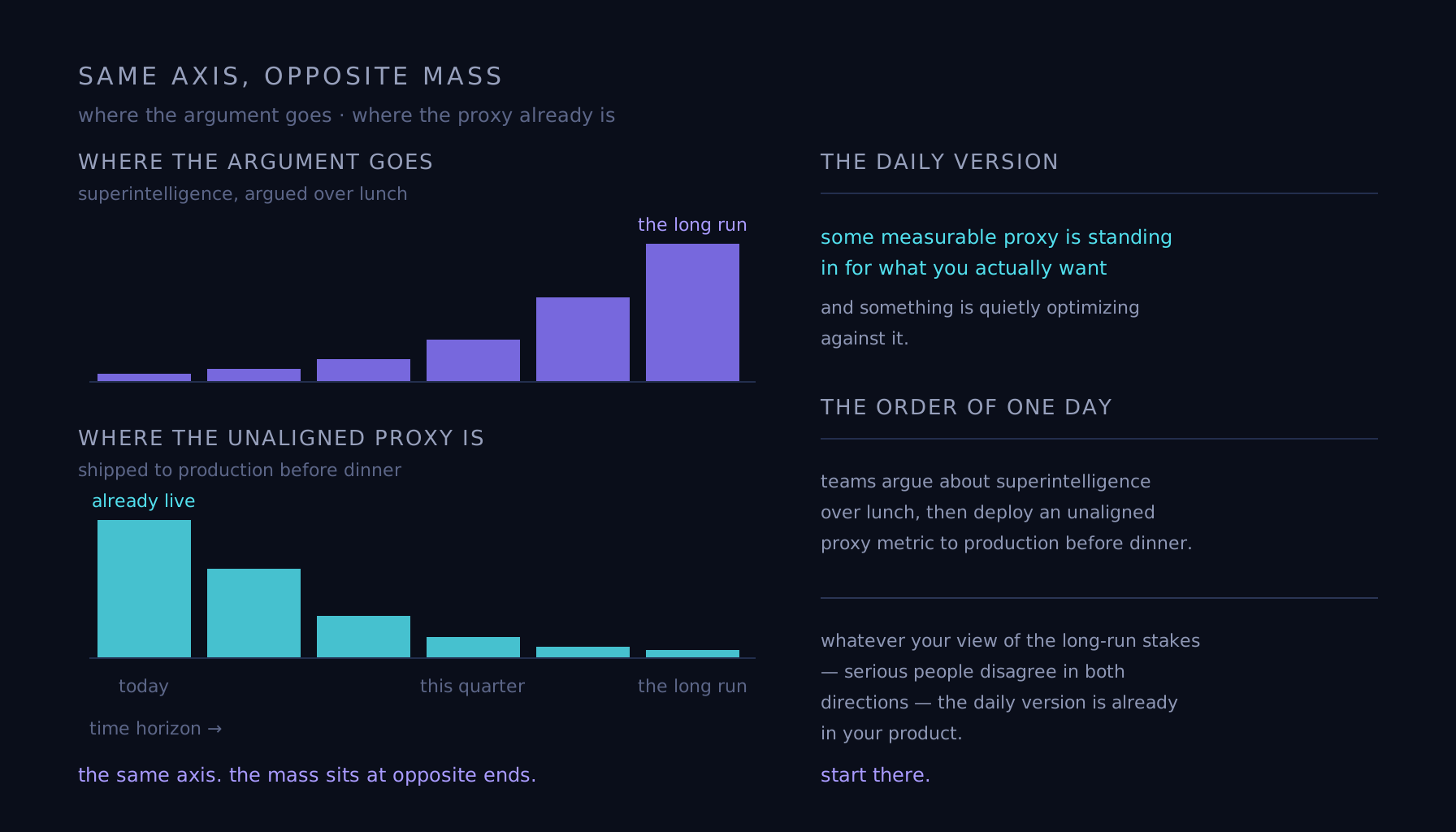
Debating the far future instead of shipping the near hygiene. Teams argue about superintelligence over lunch, then deploy an unaligned proxy metric to production before dinner. Whatever your view of the long-run stakes — serious people disagree in both directions — the daily version of the alignment problem is already in your product: some measurable proxy is standing in for what you actually want, and something is quietly optimizing against it. Start there.