Robotics & Embodied AI · entry 04/06 · 2 min read
Manipulation & the humanoid bet
Grasping the long tail of objects is still research; meanwhile billions are betting that the human form factor is the shortcut to general-purpose robots. Both stories, honestly.
Why hands are hard
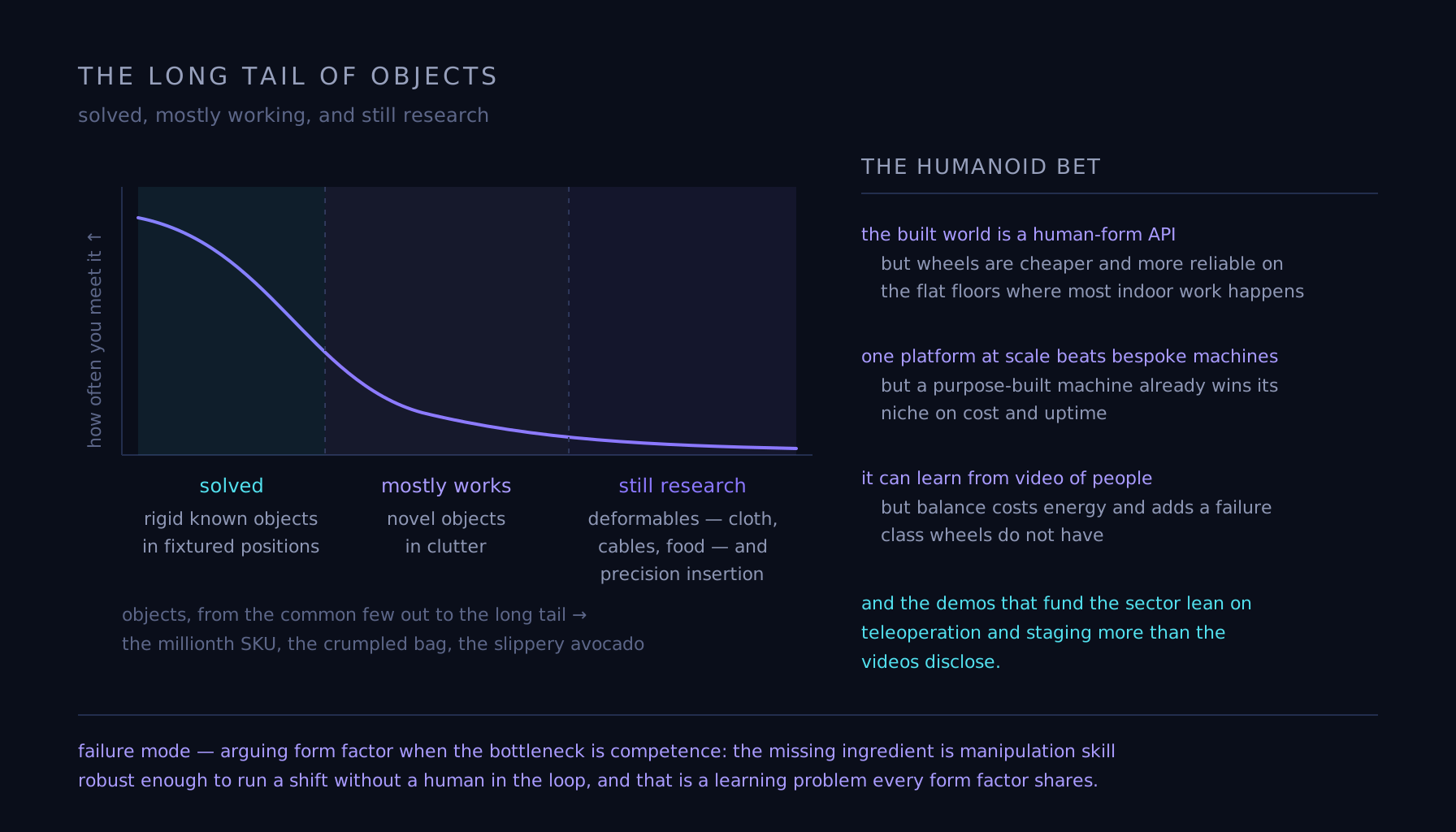
Manipulation concentrates everything hard about embodiment into ten square centimeters. Contact forces change discontinuously; objects are occluded by the very hand reaching for them; a grasp that works on the mug's rim fails on its body; and the long tail is merciless — the warehouse's millionth SKU, the crumpled bag, the slippery avocado. Rigid known objects in fixtured positions are solved. Novel objects in clutter mostly work. Deformables — cloth, cables, food — and precision insertion under uncertainty remain research, which is why "pick anything" demos choose their anything carefully.
The humanoid argument
The case for human-shaped robots is not romance; it's three economics claims. One: the built world — stairs, shelves, handles, vehicles — is a human-form API, and a humanoid inherits it without retrofitting the facility. Two: one general platform manufactured at scale beats a thousand bespoke machines on unit cost, the smartphone play. Three: the form factor can learn from the largest dataset that exists — video of people doing things, plus teleoperation that maps naturally onto matching morphology. Add motors, batteries, and learned control all maturing at once, and the bet stops sounding absurd.
The counter-argument
Every claim has a rebuttal with an invoice. Wheels are cheaper, faster, and more reliable than legs anywhere with flat floors — which is most places work happens indoors. Purpose-built machines already win their niches on cost and uptime, and a humanoid competing with a $30k arm must beat it at the arm's own job. Balance consumes energy and adds a failure class wheels don't have. And the demos that fund the sector lean on teleoperation and staging more than the videos disclose — the gap between a controlled demo and a shift of unattended work is the entire question, and it is measured in reliability, not capability.
Failure mode
Arguing form factor when the bottleneck is competence. Humanoid versus wheels-and-arm is a hardware debate, but nobody's hardware is the binding constraint — the missing ingredient is manipulation skill robust enough to run a shift without a human in the loop, and that's a learning problem every form factor shares. Watch the skill curves, not the body count; the platform that wins will be the one whose policies stop needing rescues, whatever it looks like.