Robotics & Embodied AI · entry 06/06 · 2 min read
Robots at work
Warehouses, operating rooms, farm rows and highways: embodied AI deploys where the environment can be bounded — and the distance from pilot to fleet is measured in nines, not demos.
The deployment map
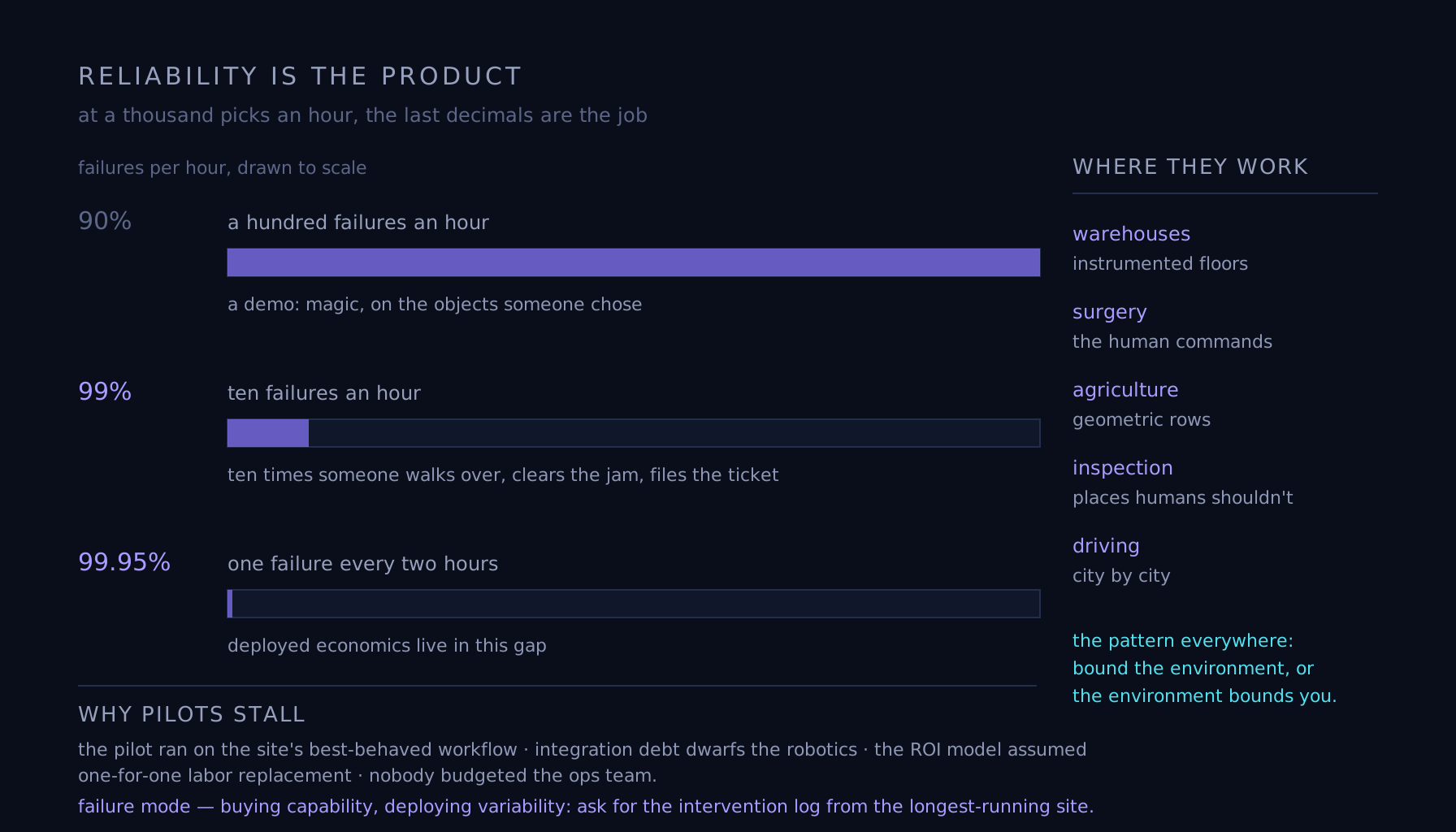
Working robots cluster where the world can be partially tamed. Warehouses lead: mobile robots ferrying shelves, arms picking from bins — high volume, indoor floors, a facility you're allowed to instrument. Surgical robots extend a surgeon's precision (the human still commands; the machine steadies). Agriculture fields vision-guided weeders and pickers where labor is scarce and rows are geometric. Inspection robots walk pipelines and substations humans shouldn't. And autonomous driving — robotics' biggest bet — now runs genuine driverless taxi services in a handful of cities, each city won street by street with mapping, validation, and remote-assist infrastructure. The pattern everywhere: bound the environment, or the environment bounds you.
Reliability is the product
A demo at 90% success is magic; a deployment at 99% is a staffing problem. The arithmetic is brutal: at a thousand picks per hour, 99% means ten failures an hour — ten times someone walks over, clears the jam, files the ticket. Deployed economics live in the gap between 99% and 99.95%, in mean-time-between-interventions, in recovery behavior when the failure happens anyway. This is why serious vendors sell outcomes (picks completed, miles driven) rather than robots, and staff remote operations centers where humans supervise fleets and untangle the long tail — human-in-the-loop as a permanent tier of the architecture, not a temporary crutch.
Why pilots stall
The industry's quiet graveyard is pilot purgatory: a successful three-month trial that never becomes a fleet. The causes repeat. The pilot ran on the site's best-behaved workflow; scaling meets the other nine. Integration debt — WMS, safety certification, union agreements, IT — dwarfs the robotics. The ROI model assumed the robot replaced labor one-for-one, when it actually reshapes the workflow around its own exceptions. And nobody budgeted the ops team. The successful deployments read boring: narrow scope, instrumented environment, exception handling designed first, expansion only after the intervention rate flatlines.
Failure mode
Buying capability, deploying variability. Procurement watches the robot succeed on the demo objects and signs; the floor then feeds it the real distribution — shrink-wrapped multipacks, crushed boxes, seasonal SKUs nobody mentioned — and the policy's dataset had no worst days in it. The pre-purchase question that predicts everything: show me the intervention log from your longest-running customer site, unedited. Vendors who have one will show it; vendors who won't, just answered.