Speech & Audio · entry 06/06 · 2 min read
Audio beyond speech
Diarization, speaker verification, and sound-event detection — the unglamorous audio tasks that meetings, security, and machines actually run on, and the cloning problem that hit one of them.
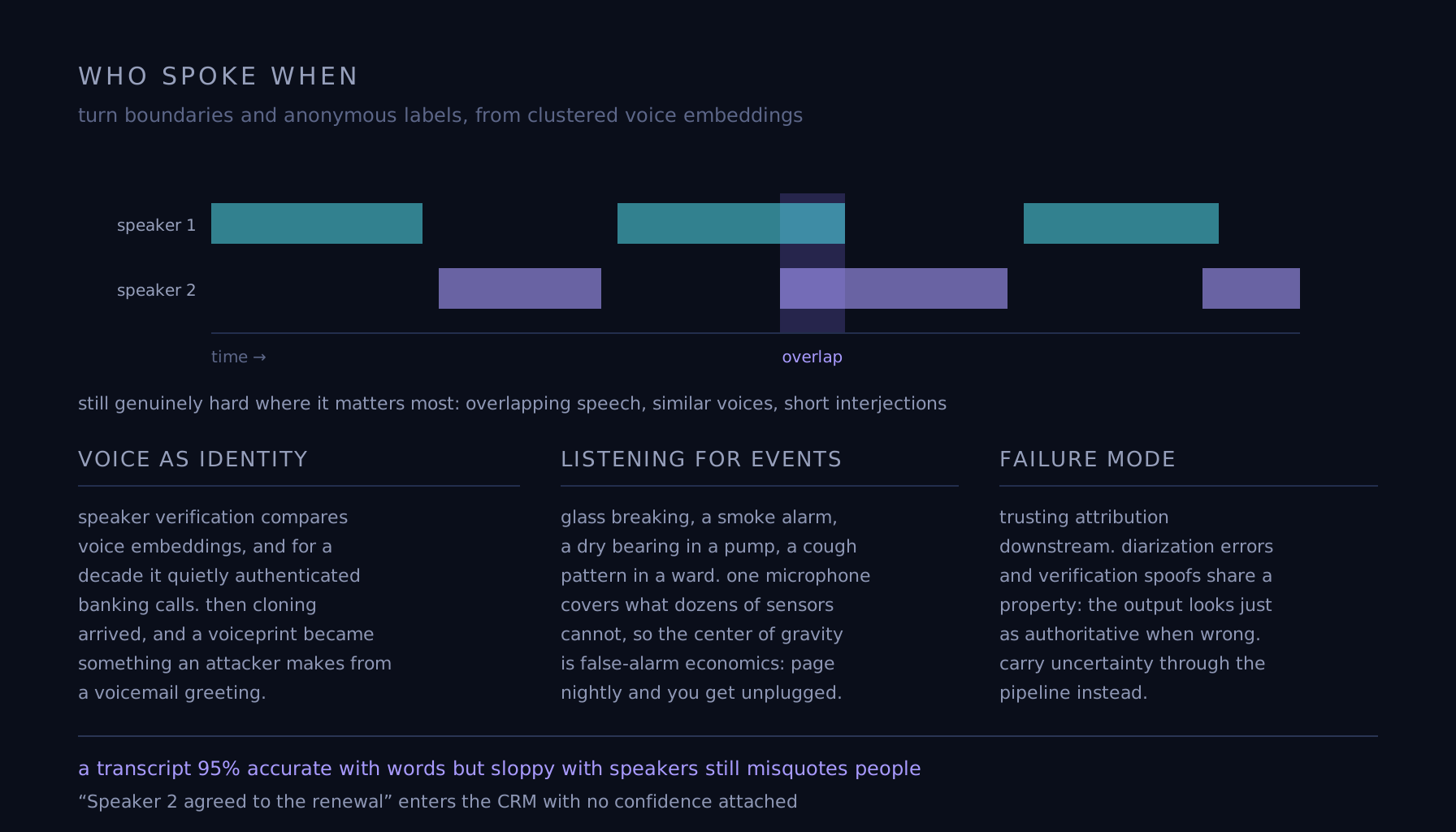
Who spoke when
Diarization segments a recording by speaker — turn boundaries and anonymous labels, "Speaker 1, Speaker 2" — by embedding short audio windows into a voice-characteristic space (the audio cousin of text embeddings) and clustering. Paired with transcription it turns an hour of meeting into an attributed script, which is the actual product in meeting notes, call analytics, and medical scribes. It remains genuinely hard where it matters most: overlapping speech, similar voices, short interjections. A transcript that's 95% accurate with words but sloppy with speakers still misquotes people — attribute the wrong sentence in a sales call summary and you'll learn how much "who said it" carries.
Voice as identity — briefly
Speaker verification asks "is this the enrolled person?" by comparing voice embeddings, and for a decade it quietly authenticated banking calls. Then cloning arrived, and a voiceprint became something an attacker can synthesize from a voicemail greeting. Anti-spoofing models — detecting synthesis artifacts — are in an arms race they are not clearly winning. The sober position: voice can remain one signal in a bundle, but any system where a voice match alone moves money or resets accounts is now legacy risk, and the provenance problem owns the long-term answer.
Machines listening for events
Sound-event detection classifies what's audible: glass breaking, a smoke alarm, a dry bearing in a pump, a cough pattern in a ward. Acoustic monitoring is cheap to deploy — one microphone covers what dozens of sensors can't — and self-supervised audio foundations mean a usable detector needs only modest labeled data. The engineering center of gravity is false-alarm economics: a factory-floor model that pages someone nightly for a forklift beep gets unplugged by Thursday, which makes threshold-setting a precision-recall decision about human attention, not a modeling detail.
Failure mode
Trusting attribution downstream. Diarization errors and verification spoofs share a property: the output format looks exactly as authoritative when wrong. "Speaker 2 agreed to the renewal" enters the CRM with no confidence attached; a spoofed voice match logs as a clean authentication. Carry uncertainty through the pipeline — flag low-confidence turns, require step-up verification on sensitive actions — because a neat label on messy audio is the most dangerous artifact in the stack.